Varmala ceremony meaning: why everyone tries to lift the groom
What does the varmala, or jaimala, mean? Where the garland exchange comes from, why friends lift the groom and brothers lift the bride, and how to invite guests.
The baraat has danced its way to the gate, the bride steps out, and two heavy garlands of roses and marigolds are handed over. Then, just as she raises hers, the groom’s friends hoist him onto their shoulders, out of reach. The varmala, also called the jaimala, is the moment every guest crowds forward for. Behind the laughter is one of the oldest ideas in a Hindu wedding: a bride choosing her husband.
What is the varmala?
Varmala joins var, the groom, and mala, a garland; jaimala, the other common name, is a garland of victory. In most North Indian weddings it comes when the baraat arrives, once the groom’s party has been welcomed, and before the kanyadaan and the pheras. The bride and groom stand face to face, often on a raised stage, and place garlands around each other’s necks. For many couples it is their first moment face to face that day.
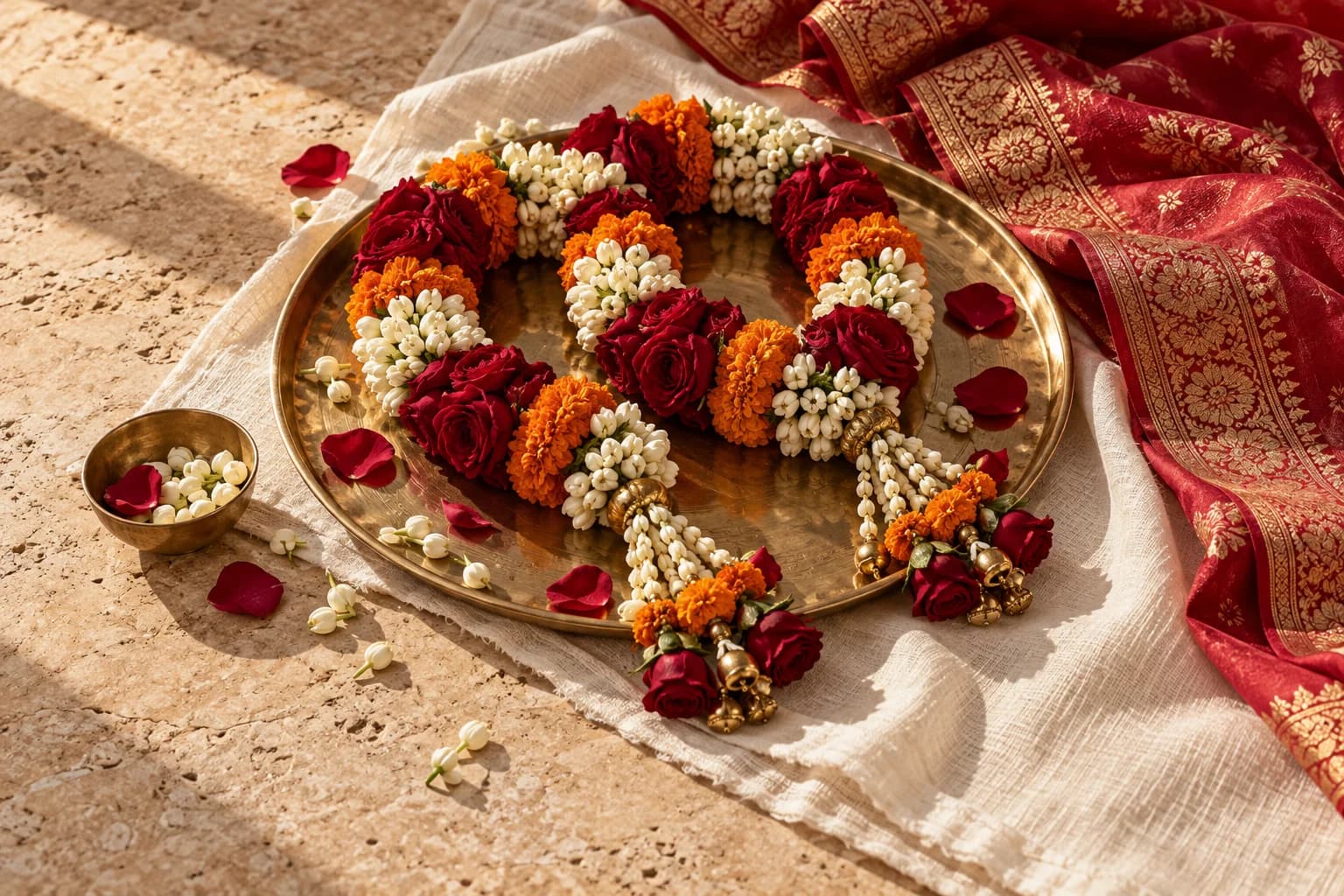
The garlands are usually roses, marigolds and jasmine, often finished with tassels, and heavy enough to need both hands. Families order them with the rest of the wedding flowers and keep them fresh until the moment arrives.
Where it comes from: the swayamvar
The garland goes back to the swayamvar of the old stories, literally a bride’s own choice. Suitors gathered at her father’s court, and she chose her husband by placing a garland on him. In the Mahabharata, Damayanti passes over gods who have taken Nala’s form and chooses the real Nala. The garland meant, simply: I choose you.
In today’s varmala the bride and groom garland each other, in front of both families. It is a yes from both sides, said with flowers instead of words.
Once, it meant: I choose you. Now, they both say it.
Why friends lift the groom
Then the fun begins. As the bride lifts her garland, the groom’s friends hoist him up so she cannot reach. Her brothers and cousins answer by lifting her right back, and the stage turns into a cheerful contest with the whole wedding shouting advice. It is a playful custom, common in many North Indian weddings, rather than part of the rite itself.
The old joke behind it is that whoever garlands first will have the upper hand in the marriage. Nobody takes it seriously, which is the point. And some grooms skip the contest and simply bow their head so the bride can reach, a small gesture of respect that guests tend to remember.
Garland exchanges across India
Many Hindu weddings have a garland exchange, each with its own timing and customs. The varmala described here is the North Indian form; two others are just as loved.
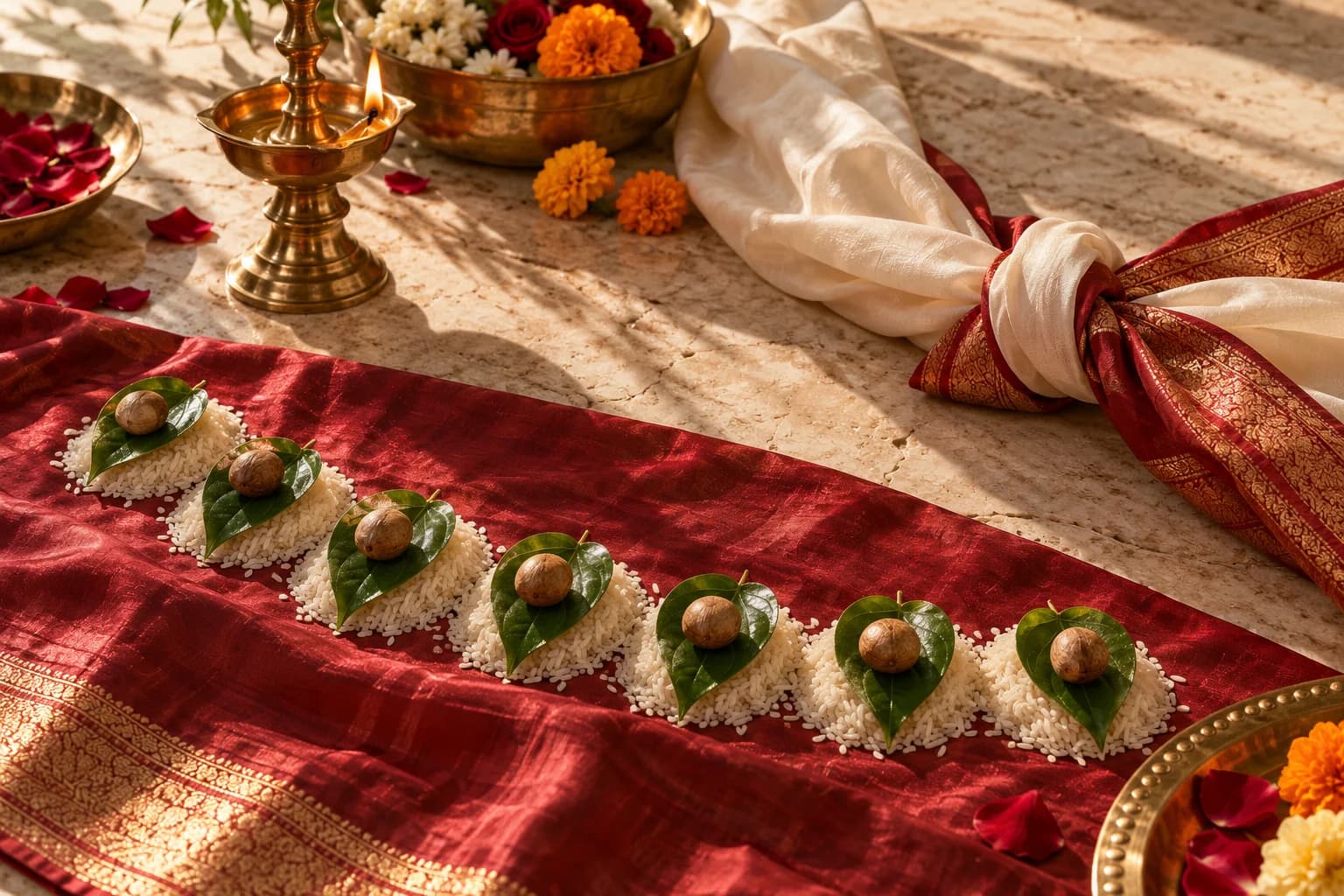
- Bengali weddings: mala badal. The bride, seated on a low wooden piri, is carried around the groom seven times by her brothers, lowers the betel leaves hiding her face for the subho drishti, the first look, and the couple exchange garlands.
- Tamil weddings: maalai maatral. The couple exchange garlands three times, often perched on the shoulders of uncles and cousins who try to keep them apart.
Varmala on your invitation
The varmala rarely needs a line of its own, because it follows the baraat. List the baraat with its time and venue and add “varmala to follow”, since many guests will want to be there for it. If the pheras are much later, at the muhurat fixed by your pandit, give them their own time, so guests can decide how long to stay.
Hindu wedding invitations: wording, functions and templates
Kanyadaan meaning: the promise behind the ritual
Quick answers
- Are varmala and jaimala the same? Yes. They are two names for the same exchange of garlands.
- When does the varmala happen? In most North Indian weddings, when the baraat arrives, before the kanyadaan and the pheras.
- Who garlands first? It varies by family. The old joke says whoever goes first gets the upper hand.
- Why do friends lift the groom at the varmala? For fun. It makes the bride work for it, and her brothers lift her right back. It is a playful custom, not part of the rite.
Written by Inviteeq Editorial, with care for every celebration.