Vidaai rice ritual: why the bride throws rice behind her
Why does a bride throw rice over her shoulder at her vidaai, and tip a kalash of rice at her new home? The meaning behind both rituals, and how families do them.
Most of us have cried through a vidaai without ever asking about the rice. Just before she leaves her parents’ home, the bride takes handfuls of rice and throws them back over her shoulder, without turning around. Hours later, at the door of her new home, she tips over a kalash of rice with her foot. The two moments are connected, and together they say something lovely about how a Hindu wedding sees a daughter.
What is vidaai?
Vidaai is the bride’s farewell to her family after the wedding ceremony, often in the early hours of the morning once the pheras are done. Punjabi families call it the doli. It is usually the most emotional part of the wedding: songs written for this moment are sung, and relatives who held it together through every function finally let the tears come.
Why the bride throws rice behind her
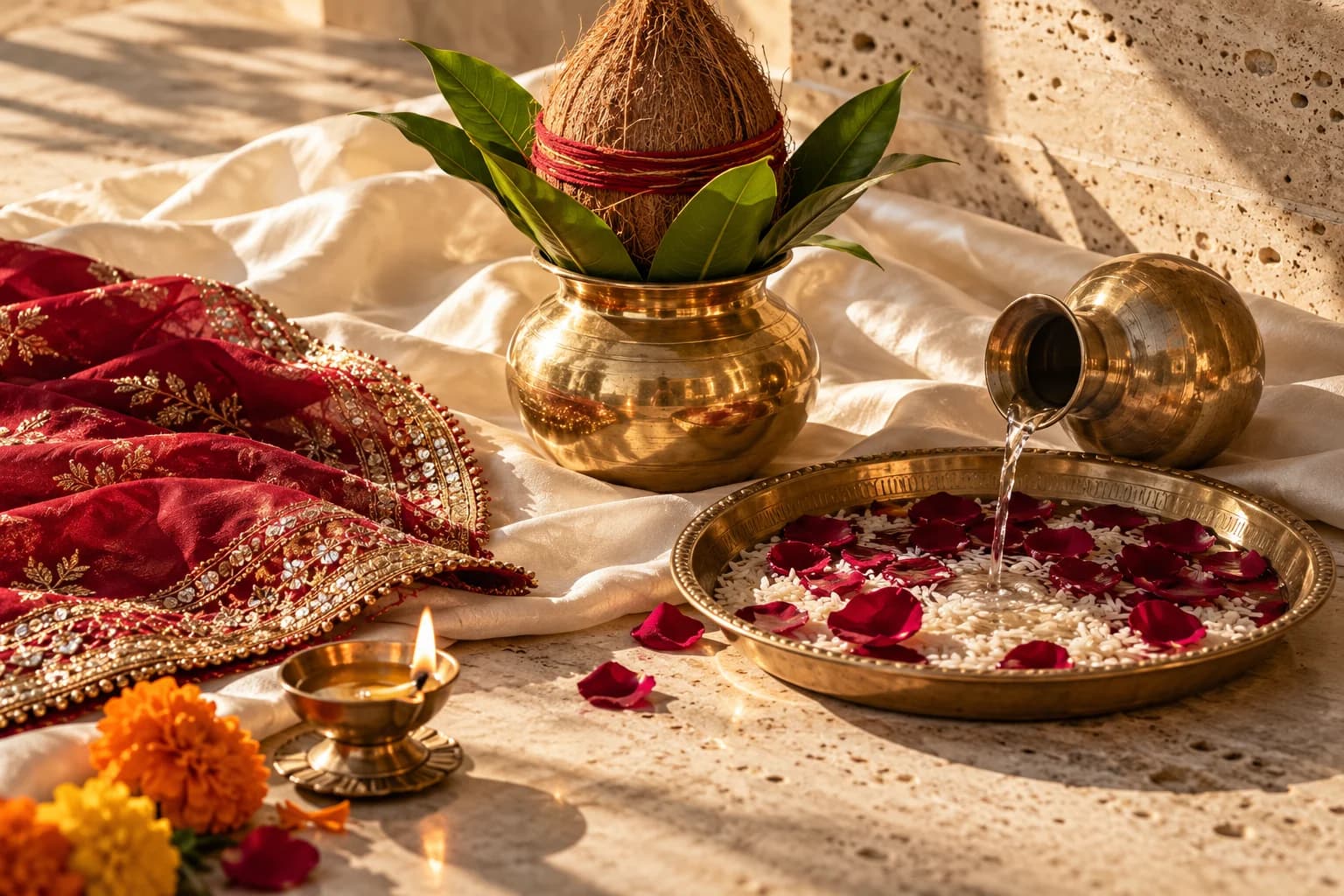
At the doorway, someone holds a plate of rice, sometimes mixed with flowers or coins. The bride takes a handful and throws it back over her head or shoulder, usually three or five times, without looking back. Behind her, her mother or another woman of the family catches the grains in the end of her saree, the aanchal or pallu.
In many Hindu families a daughter is seen as a form of Lakshmi, the goddess of prosperity. So the gesture is read as a wish: that the plenty she brought to her parents’ home stays there after she has gone, and that the house never runs short of food or good fortune. Many families simply describe it as her last blessing on the home she grew up in.
One handful of rice thanks the home she leaves. The other blesses the home she joins.
Kanakanjali in Bengali weddings
Bengali weddings have their own version, kanakanjali. The bride throws rice, and sometimes coins, over her head into her mother’s aanchal. It is traditionally explained as repaying her parents for everything they have given her. Some families find that framing uncomfortable today and prefer to describe it as gratitude or a blessing; the gesture itself is the same.
Griha pravesh: the kalash at the door
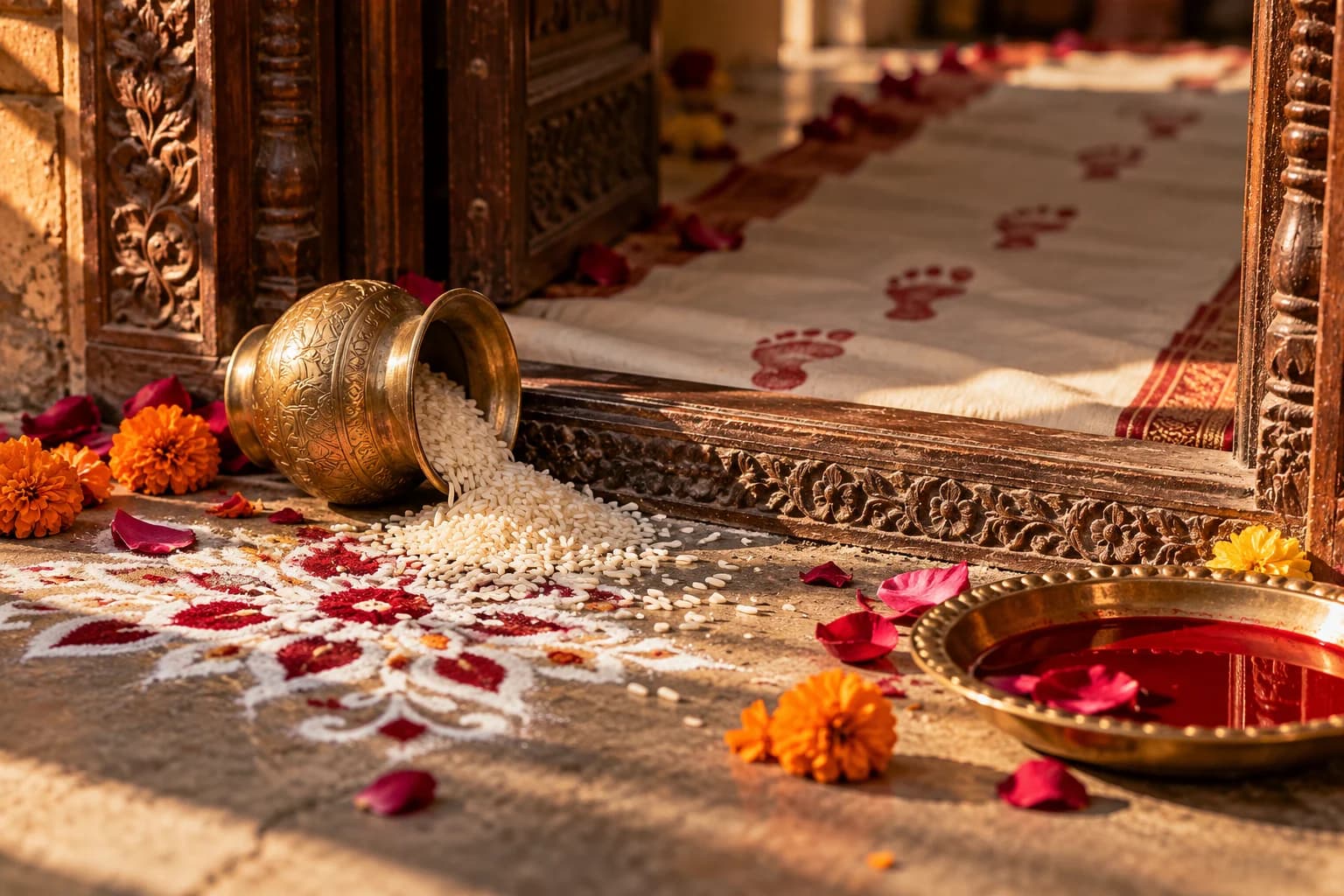
When the couple reach the groom’s home, his mother usually welcomes them with an aarti. A small kalash filled with rice is placed on the threshold, and the bride tips it over with her right foot so that the rice spills into the house. Where she left prosperity behind at the vidaai, here she is welcomed as Lakshmi arriving, bringing good fortune in with her.
In many homes she then steps into a plate of red alta, sometimes mixed with milk, and walks inside on a white cloth, leaving a trail of red footprints. They are often called Lakshmi’s footsteps. Many families follow with light-hearted games, such as the couple searching for a ring in a bowl of milk, to ease the bride into her new home.
- The aarti: the groom’s mother welcomes the couple at the door
- The kalash: the bride tips a pot of rice over the threshold with her right foot
- The alta: she steps into red alta and leaves footprints as she walks in
- The games: in many families, a ring hunt or similar game follows
Two rituals, one idea
Seen together, the two rituals bookend the bride’s journey. The rice at the vidaai thanks and blesses the family she is leaving; the rice at the griha pravesh blesses the family she is joining. Neither treats her as something handed over. In both, she is the one giving.
Vidaai and griha pravesh on your invitation
Neither ritual is usually listed as an event for all guests. Vidaai follows the wedding ceremony, and its time depends on when the pheras finish. If close family should stay until the end, say so in a personal note rather than on the main invitation. The griha pravesh happens at the groom’s home and is often followed a day or two later by a reception, which is worth listing with its own time and venue.
Hindu wedding invitations: wording, functions and templates
Kanyadaan meaning: the promise behind the ritual
Quick answers
- Why does the bride throw rice at her vidaai? As a blessing that the prosperity she brought to her parents’ home stays with them after she leaves.
- Who catches the rice? Usually her mother, in the end of her saree, or another woman of the family.
- What is kanakanjali? The Bengali version of the ritual, where the bride throws rice and sometimes coins into her mother’s aanchal.
- Why does the bride kick a kalash of rice? At the griha pravesh, tipping the rice into her new home marks her arrival as Lakshmi, bringing good fortune with her.
Written by Inviteeq Editorial, with care for every celebration.