Saptapadi: the meaning of the seven steps and vows
What do the seven vows of a Hindu wedding actually say? The Sanskrit of each Saptapadi step, what it means, and why the last step is about friendship.
Ask anyone at a Hindu wedding and they will tell you there are seven vows. Ask what they say and the room goes quiet. Saptapadi, the seven steps, is the moment that completes the marriage, and the verses behind it are short, old and surprisingly tender. Here is what each step means.
What is Saptapadi?
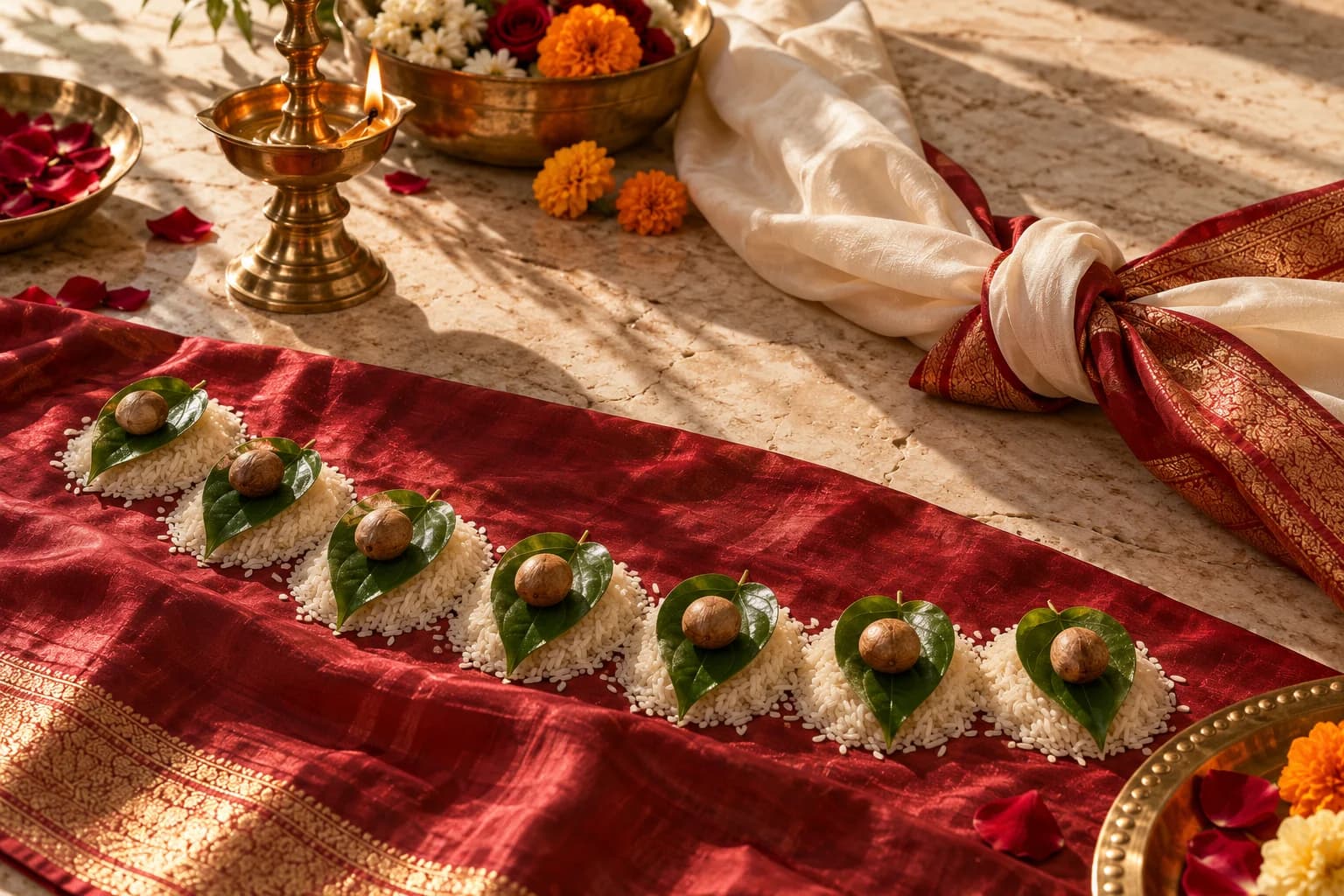
Saptapadi means “seven steps”. In the Vedic ceremony the groom leads the bride seven steps beside the sacred fire, and with each step he recites a short line asking her to take that step for a particular blessing. Their garments are usually tied together in the gathbandhan knot, so they walk as one.
How it looks depends on the family. In many North Indian weddings the seven steps are folded into the seven pheras around the fire. In other traditions, including many South Indian ceremonies, the couple circle the fire separately and then take seven distinct steps, sometimes onto seven small heaps of rice.
Why the seventh step matters
The seventh step is not only symbolic. Under Section 7 of the Hindu Marriage Act, 1955, where the ceremony includes Saptapadi, the marriage becomes complete and binding when the seventh step is taken. An old Sanskrit saying puts the same idea more warmly: saptapadam hi mitram, seven steps taken together make two people friends.
The seven vows, step by step
The verses below follow the Paraskara Grihya Sutra, one of the household ritual manuals many pandits draw on. Wording varies a little between traditions, and the meanings given here are loose translations.
- Step one, ishe ekapadi bhava: take one step for nourishment, for food and sustenance.
- Step two, urje dvipadi bhava: two steps for strength, of body and of mind.
- Step three, rayasposhaya tripadi bhava: three steps for prosperity and a growing household.
- Step four, mayobhavaya chatushpadi bhava: four steps for happiness and comfort together.
- Step five, prajabhyah panchapadi bhava: five steps for children and family.
- Step six, ritubhyah shatpadi bhava: six steps for the seasons, for every season of life together.
- Step seven, sakha saptapadi bhava: with seven steps, be my friend.
सखा सप्तपदी भव। Sakha saptapadi bhava. With seven steps, be my friend.
After six steps for food, strength, wealth, happiness, family and time, the last asks for friendship. It is the vow that makes the others possible. In the sutra the sequence continues with a line asking the bride to share his vows, and many couples today make that commitment explicitly mutual.
The seven promises you may hear instead
At many weddings in the Hindi-speaking north, the pandit also recites the saat vachan, seven promises in Hindi that the bride asks of the groom before agreeing to sit on his left as his wife. They cover sharing in religious duties, respecting each other’s parents, providing for the home and consulting each other. These vernacular promises vary by region and family, and sit alongside the older Sanskrit verses rather than replacing them.
Are pheras and Saptapadi the same?
Often, but not always. In many North Indian ceremonies the seven pheras are the Saptapadi. In ceremonies that follow the grihya texts more closely, the couple circle the fire during the laja homa, offering puffed rice, and then take the seven steps as a separate rite. Either way, the seventh step is the one that seals the marriage.
Saptapadi on your invitation
Saptapadi happens inside the wedding ceremony, so it does not need its own line. List the wedding with the time guests should arrive, and mention the pheras if your guests will want to be seated for them. If the muhurat is late at night, “pheras at the auspicious hour” lets guests plan without a precise time.
Hindu wedding invitations: wording, functions and templates
Kanyadaan meaning: the promise behind the ritual
Quick answers
- What does Saptapadi mean? Seven steps. The couple take seven steps together by the sacred fire, each with its own blessing.
- What is the seventh vow? Sakha saptapadi bhava: with seven steps, be my friend.
- When is a Hindu marriage complete? Under the Hindu Marriage Act, where Saptapadi is part of the rites, when the seventh step is taken.
- Are the saat vachan the same as Saptapadi? No. The saat vachan are seven promises in Hindi recited at many North Indian weddings; Saptapadi is the older Sanskrit rite of seven steps.
Written by Inviteeq Editorial, with care for every celebration.