Mehndi ceremony meaning: why the groom’s name is hidden in the henna
Why does a bride hide the groom’s name in her mehndi? The meaning of the mehndi (mehendi) ceremony, how the colour develops, the sayings around it and how to invite guests.
A day or two before the wedding, the bride sits still for hours while a cone of henna works its way from her fingertips to her elbows. Around her, the women of the family sing to the dholak, and somewhere in the pattern the artist hides one thing on purpose: the groom’s name. The mehndi, or mehendi, is one of the most loved functions of an Indian wedding, and nearly every part of it comes with a story.
What is the mehndi ceremony?
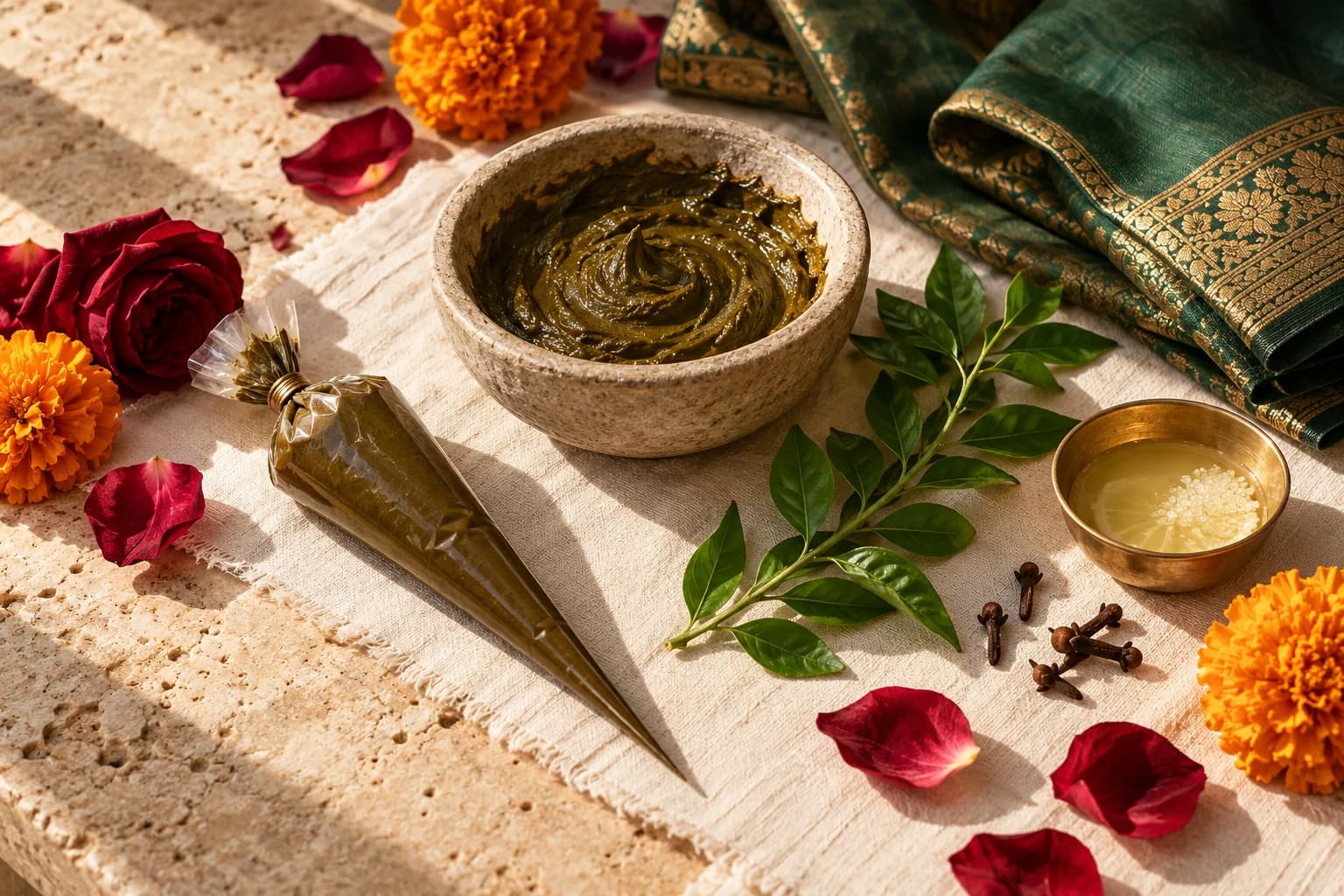
Mehndi is henna: a paste of the dried, ground leaves of the henna plant, mixed with water and often lemon juice, then piped from a cone into patterns on the bride’s hands and feet, often up to the elbows and shins. It is one of the solah shringar, the sixteen adornments of a bride. The lists differ from region to region, but mehndi appears in nearly all of them.
Traditionally the bride’s family hosts the mehndi, usually a day or two before the wedding, in the afternoon or evening. The bride sits still for several hours while the design is drawn and left to dry. Around her, women of the family and friends have their own hands decorated, sing to the dholak and eat. Many grooms’ families hold a smaller mehndi of their own, and some grooms have a little henna applied too.
Families make it their own. Punjabi and Sikh families often hold it on the same day as the maiyan or the jaggo, many Muslim families call the evening rasm-e-henna, and many couples now fold the mehndi and the sangeet into one long day, with henna in the afternoon and dancing at night.
Why the groom’s name is hidden in the mehndi
Somewhere in the design, tucked into a paisley, a vine or the middle of a palm, the artist hides the groom’s name or his initials. Later he has to find it, usually with the family watching and teasing him. Many say the custom began when most marriages were arranged: searching her hands for his name gave two near-strangers a reason to sit close and hold hands. It is a widely repeated explanation rather than recorded history, but it suits the spirit of the game.
What happens if he cannot find it depends on whom you ask. In some families he owes the bride a gift; in others the joke is that she will have the upper hand in the marriage. In many homes the artist is a cousin or an aunt rather than a professional, and the name is hidden just as carefully.
Not just a design. A secret, written in henna, for one person to find.
What the colour is said to mean
Fresh henna paste is a muddy green, and the stain it leaves starts out orange. Over the next day or two it darkens to a deep reddish brown, so the bride keeps the paste on for as long as she can, often overnight. Families dab a mix of lemon juice and sugar on the drying paste to help it stay on the skin, and some warm her hands over the smoke of cloves heated on a tawa.
Then come the sayings. The best known is that the darker the mehndi, the deeper the love; some say instead that it shows how much her mother-in-law will love her. In some homes a new bride is not expected to do housework until her mehndi fades, which can take a couple of weeks. None of these is a rule, and every family tells them with a smile.
Natural henna, not black henna
Natural henna stains orange to reddish brown, never jet black. Pastes sold as black henna are often darkened with PPD, a hair-dye chemical that can cause blistering and lasting allergies on skin, and both the US FDA and Health Canada warn against them. Ask your artist what is in their cones, and if anyone has sensitive skin, try a small patch a few days before.
Mehndi on your invitation
The single most useful line is when the artists start and finish: guests who want henna should come early, because the artists work through a queue and every design needs time to dry. Add a dress note, such as greens and pinks, a reminder to wear sleeves that roll up easily, and whether there is a meal or only snacks. If the mehndi is for women only, for both families or for everyone, say so, so nobody has to ask.
Mehndi invitation wording and templates
Haldi ceremony meaning: why turmeric comes before the wedding
Quick answers
- Why is the groom’s name hidden in the mehndi? So he can search for it later. Many say the custom began in arranged marriages, as a reason for the couple to hold hands.
- When is the mehndi ceremony? Usually a day or two before the wedding, in the afternoon or evening, hosted by the bride’s family.
- Is it mehndi or mehendi? Both. They are two spellings of the same word, मेहंदी, for henna.
- Does a darker mehndi mean anything? An old saying links a deep colour to a deep love. In practice the colour depends on the henna, how long it stays on and the skin.
- What should guests wear to a mehndi? Bright colours, often greens and pinks, with sleeves that roll up easily.
Written by Inviteeq Editorial, with care for every celebration.