Nal and Damayanti: why there were five Nals at her swayamvar
At Damayanti’s swayamvar, four gods came in Nal’s form, so five Nals stood before her. The Mahabharata’s tale of the golden swan, the signs that gave the gods away, and Nal’s shadow.
In the Mahabharata’s tale of Nal and Damayanti, four gods, Indra, Agni, Varuna and Yama, came to Damayanti’s swayamvar in Nal’s form, so she saw five men exactly alike. She prayed and looked closely: the gods did not blink or sweat, their feet did not touch the ground and their garlands stayed fresh. Nal blinked, sweated, stood on the earth, wore a wilting garland and cast a shadow. She garlanded him.
A princess, a hall full of kings, a garland in her hands, and the man she loves standing in front of her five times over. It is one of the great love stories of the Mahabharata, and the way she tells them apart is the best part of it.
Where the story comes from
The story of Nal, or Nala, is the Nalopakhyana, told in the Vana Parva, the Book of the Forest, of the Mahabharata. The sage Brihadashva tells it to Yudhishthira during the Pandavas’ exile. Nal is the king of Nishadha; Damayanti is the princess of Vidarbha. The full story goes much further, into a game of dice and an exile of their own. This is only its beginning.
Love without meeting, and a golden swan
Nal and Damayanti fell in love before they had ever seen each other, each hearing the other praised. In Kisari Mohan Ganguli’s translation, they ‘conceived an attachment towards each other not begot of sight’.
Then came the messenger. Nal caught one of a flock of swans with golden wings. The swan promised to praise him to Damayanti, flew to Vidarbha, did exactly that, and carried her words back to him.
Sandesh laata tha… ek sone ka hans! Their messenger… a golden swan!
Why five Nals stood at the swayamvar
A swayamvar, literally ‘own choice’, was a gathering of suitors at which the bride chose her husband by placing a garland on him. When Damayanti’s swayamvar was held, four gods came too: Indra, Agni, Varuna and Yama. Each of them took Nal’s form. Standing in the hall, she ‘saw five persons all alike in appearance’.
In the epic, the gods had even sent Nal himself to Damayanti beforehand, as their messenger. Her heart did not change. Now she had to find him among four perfect copies.
The signs that gave the gods away
Damayanti did not guess. In the epic she first prayed to the gods, ‘with mind and speech, with folded hands’, and then she looked again.
Four of them did not sweat. Their eyes did not blink. Their garlands did not fade, no dust touched them, and they stood without touching the ground. One stood revealed by his shadow: his garland was fading, he was stained with dust and sweat, he stood on the ground, and his eyes blinked. That was Nal.
Ek ki palak jhapki, paseena aaya, maala murjhaai, pair dharti pe… aur parchhaai bhi! One blinked, broke into a sweat, his garland wilted, his feet on the earth… and he had a shadow!
It is a lovely idea. The gods were perfect, and that is exactly what gave them away. The real groom was the one who was human.
The varmala, and the gods’ blessing
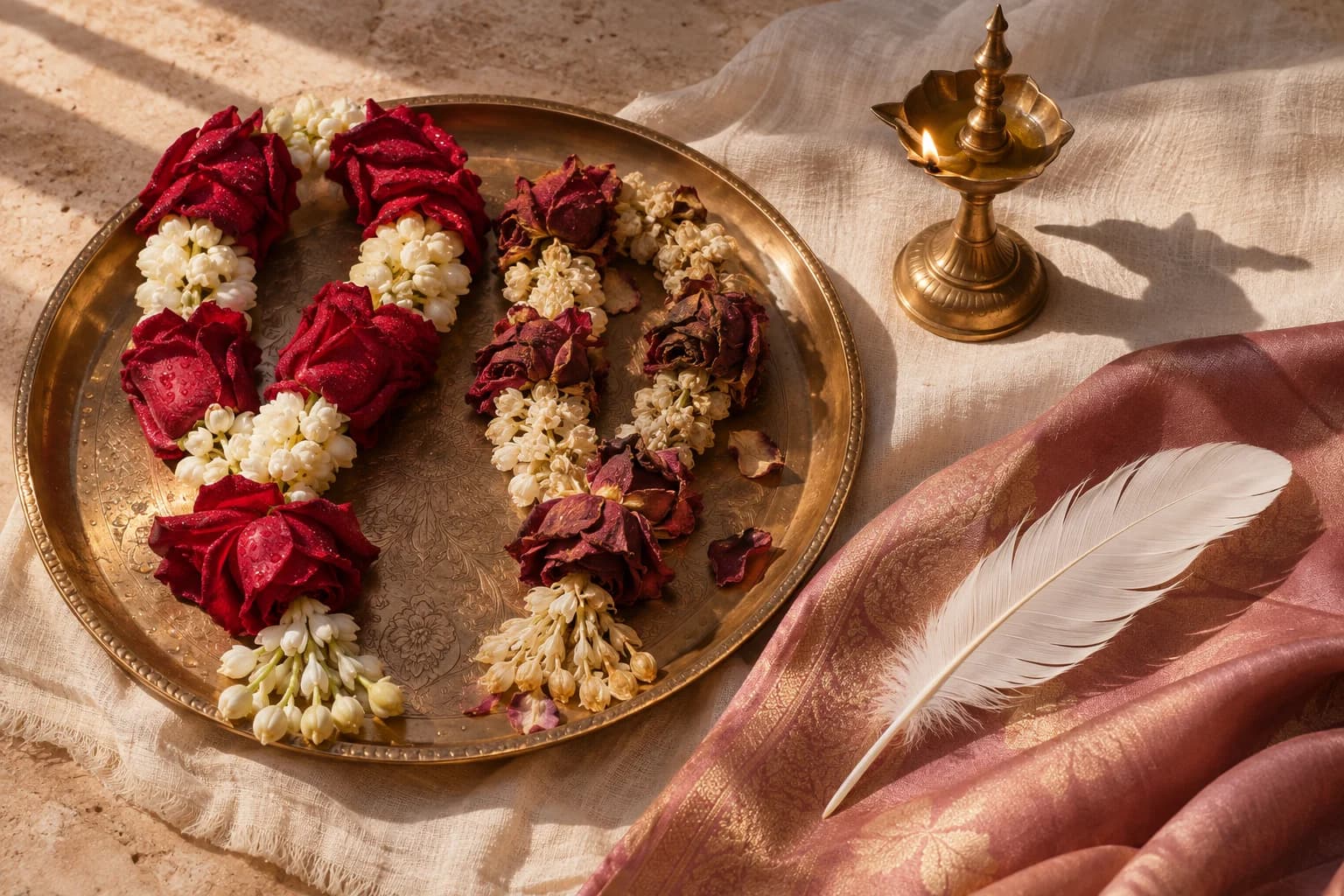
She placed the garland round Nal’s neck. The gods did not take offence. They cried out ‘Excellent!’, and the four of them gave Nal eight boons between them. The varmala at weddings today is often linked to swayamvar stories like this one, where a garland simply meant: I choose you.
Varmala meaning in English: why friends lift the groom
Today’s swan is a link
Pehla sandeshvaahak… ek hans. Aaj ka hans? Ek link! Their first messenger… a swan. Today’s swan? A link!
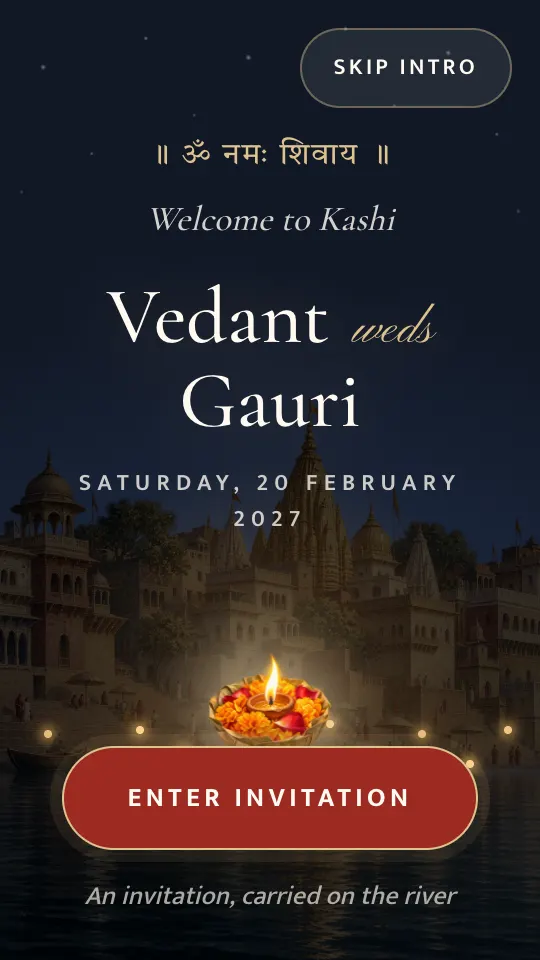
Damayanti knew the real Nal by small signs, and guests know a wedding invitation the same way: the names, the date and the city, right where they expect them. Put those on the first thing guests see, then give each function its own date, time and venue, so nobody has to scroll back through a family group to find them.
On Wedding Card Maker, the Riviera Letters design in the reel does this at its gate: a blue-hour coastline shows your names, date and place, and one tap on ‘Open the invitation’ opens into a sunlit seaside scene. It suits a beach or coastal wedding; the Hindu wedding invitations page has more traditional designs.
And if the cousins are planning matching kurtas for the sangeet, point the groom out to the photographer in advance.
Waise… sangeet mein chaar cousin, ek jaise kurte. Photographer ne dulha pehchaana… paseene se! By the way… four cousins at the sangeet, in identical kurtas. The photographer spotted the groom… by the sweat!
Hindu wedding invitations: wording, functions and templates
Open the invitation wording generator
Sangeet: why there is a whole night of songs before the wedding
Quick answers
- Why were there five Nals at Damayanti’s swayamvar? Four gods, Indra, Agni, Varuna and Yama, came in Nal’s form, so she saw five men exactly alike.
- How did Damayanti recognise Nal? After praying, she saw that the gods did not blink, sweat or touch the ground and their garlands stayed fresh, while Nal blinked, sweated, stood on the ground, wore a fading garland and cast a shadow.
- Where is the story of Nal and Damayanti told? In the Vana Parva of the Mahabharata, as the Nalopakhyana, told by the sage Brihadashva to Yudhishthira.
- Who carried messages between Nal and Damayanti? A swan with golden wings, which praised Nal to Damayanti and carried her words back to him.
Written by Inviteeq Editorial, with care for every celebration. How we write and check these stories