Easter eggs: why colourful eggs are given at Easter
Easter eggs stand for new life and the empty tomb. Why eggs are given at Easter, the red eggs, the Lenten fast, where the egg hunt and the Easter bunny came from, and Easter in Goa, Kerala and the Northeast.
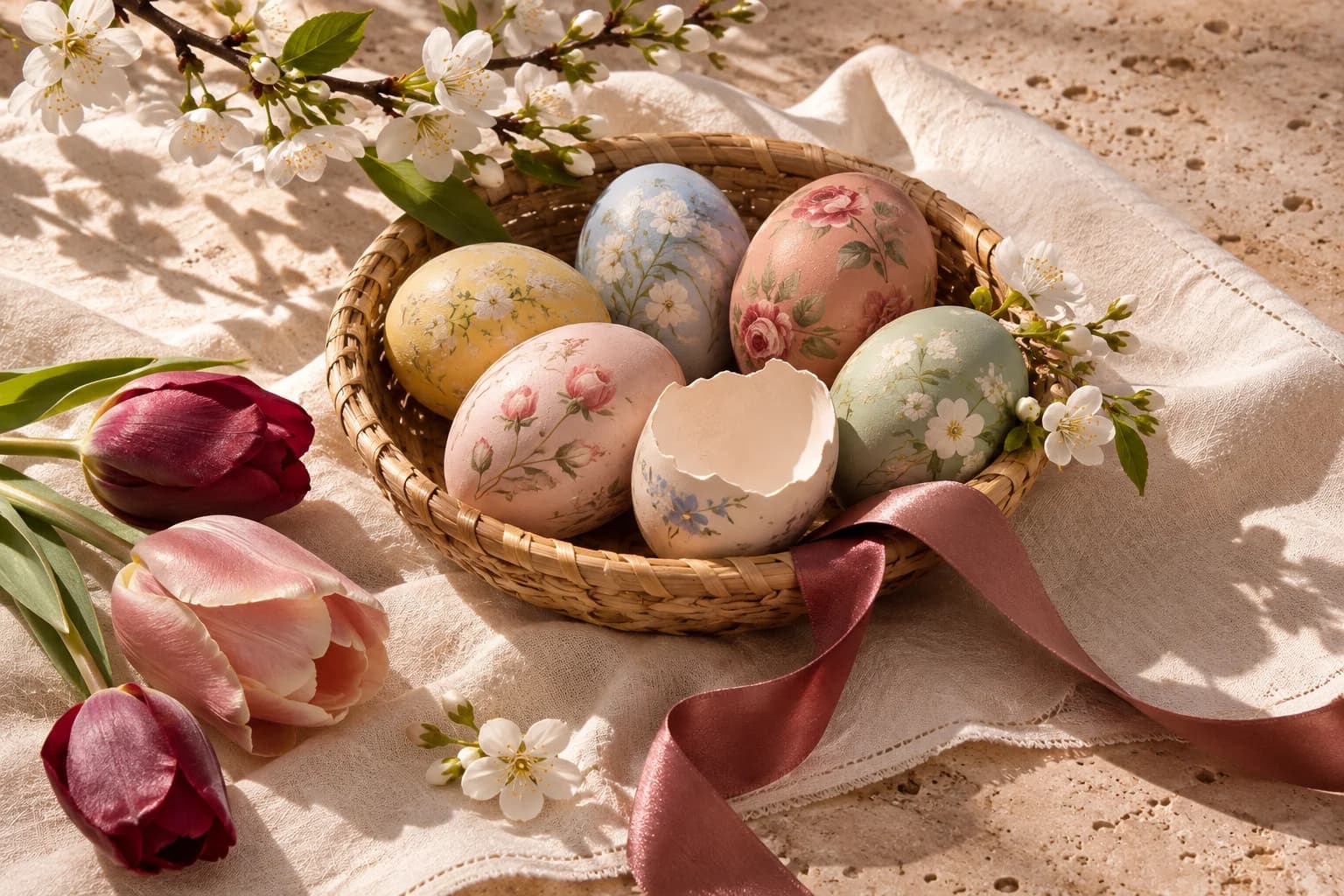
Easter eggs stand for new life. Easter celebrates Jesus rising again, and an egg, closed and still on the outside with life inside, came to recall the empty tomb. Eggs were also given up during Lent in many old Christian fasts, so Easter brought plenty. The egg hunt and the bunny came later, from German folk custom.
On Easter morning, the church bells ring, the family sits down to a feast, and somewhere a basket of painted eggs is waiting. In some homes the children are sent into the garden to hunt for them. It all looks like spring fun, but the egg was chosen for a reason that goes back to an empty tomb.
Easter and the empty tomb
In the Christian tradition, Easter is the joy of the Resurrection: Jesus rising again after his death on Good Friday. All four Gospels tell how, early on the Sunday morning, the first to come to the tomb found the stone rolled away and the tomb empty.
Why an egg?
An egg is closed and still on the outside, yet new life comes out of it. For many Christians, that makes it a natural sign of the Resurrection: a sealed shell that opens to life, like the sealed tomb that was found empty. It is a widespread reading of the custom rather than a teaching from the Gospels.
Anda bhi bahar se band, shaant, par andar se nayi zindagi nikalti hai. An egg too is closed and still outside, but new life comes out of it.
Red eggs and the Lenten fast
In some traditions, Eastern Orthodox churches among them, Easter eggs are dyed red, in memory of Christ’s blood and his sacrifice. Elsewhere they are painted every colour of spring.
There is a practical reason too. Lent is the forty days of fasting before Easter, and in many medieval Christian traditions eggs were among the foods given up. The eggs laid in those weeks were saved, so by Easter there were plenty to eat, decorate and give away.
The egg hunt and the Easter bunny
The egg hunt and the bunny came much later, and not from the church. The Easter Hare, the Osterhase, who brings and hides eggs for children, is first recorded in German lands in the 16th and 17th centuries, and travelled with German emigrants to other countries. It is a folk custom, and a cheerful one.
Joseph uncle ne hunt se pehle hi saare ande dhoondhe, aur kha gaye. Joseph uncle found all the eggs before the hunt, and ate them.
Easter in Goa, Kerala and the Northeast
In India, Easter is kept with the Easter Vigil or Sunday Mass and a family feast. In Goa, marzipan and chocolate Easter eggs are a much-loved part of the day. Kerala’s Christians and the Christian-majority states of the Northeast, such as Nagaland, Mizoram and Meghalaya, celebrate with church services and family meals. The details differ from church to church and family to family.
Easter has no fixed date. In 2027, in the calendar kept by the Catholic and most Protestant churches in India, Good Friday falls on 26 March and Easter Sunday on 28 March; Orthodox churches celebrate Easter on 2 May that year.
A new beginning on your invitation
One egg, the start of a new life; one invitation, the start of yours. If you are planning a wedding in spring, look up the Lent, Holy Week and Easter dates for that year before you fix yours, since they move every year. Holy Week is a full week of services for many families, and some parishes have their own guidance on weddings in Lent, so ask your parish early.
On the invitation, name the church exactly and give the time the service starts. If the reception is at another venue, give it its own line, address and map link, and ask guests to reply for the service and the reception separately, so you know how many will be at each.
Christian wedding invitations: wording, customs and templates
Minnu and manthrakodi: why a Kerala Christian groom ties a minnu
Christmas star: why a star goes on top of the Christmas tree
Quick answers
- Why are eggs given at Easter? The egg is a sign of new life, and for many Christians a reminder of the empty tomb.
- Why are some Easter eggs red? In some traditions, including Eastern Orthodox churches, red eggs recall Christ’s blood and sacrifice.
- What does Lent have to do with Easter eggs? Eggs were given up during Lent in many medieval Christian traditions, so they were plentiful at Easter.
- Where did the Easter bunny come from? The Easter Hare, or Osterhase, is a German folk custom first recorded in the 16th and 17th centuries.
Inviteeq Editorial द्वारा लिखा गया। हम ये लेख कैसे लिखते और जाँचते हैं