Best band wale in Delhi NCR for your baraat (2026 guide)
Well-known band baja companies in Delhi for a baraat, from Old Delhi’s brass bands to band, ghodi, baggi and lights outfits, with what a package includes, how pricing works, when to book and what to ask.
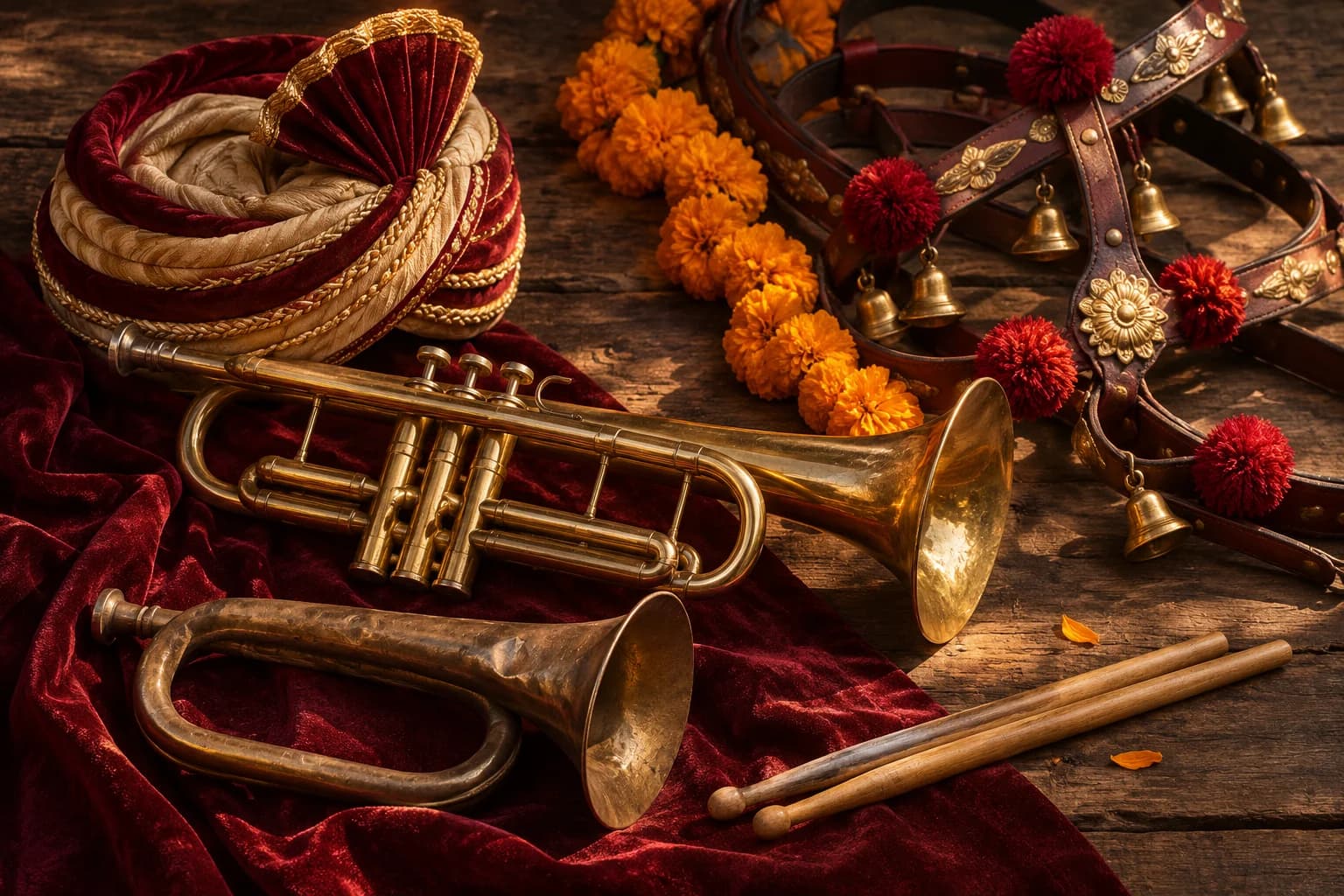
Some of the best-known band wale in Delhi are the old brass bands: Jea Band in Chandni Chowk and Master Band in Karol Bagh. For a full band, ghodi, baggi and lights package, families also shortlist Chawla Band and Taj Band in Tagore Garden, Hari Om Band in Rohini and Rajdhani Band in Shahdara.
How we chose: these are long-running Delhi band companies with current websites or social pages, most also covered by newspapers or listed on wedding directories. We have not booked them and none paid to appear. What each one offers is taken from its own site or a named source, as of November 2026, so confirm details and prices directly.
Where Delhi’s band wale are
Delhi’s band shops cluster in a few neighbourhoods: Chandni Chowk and Old Delhi, Karol Bagh around Beadon Pura and Hardhyan Singh Road, Shivaji Marg in Tagore Garden, where The Patriot found ‘every second shop’ was a wedding band, and Chuna Mandi in Paharganj. Visiting a shop lets you see the uniforms, the lights and the baggis before you book.
The old brass bands: Old Delhi and Karol Bagh
- Jea Band (Chandni Chowk, opposite Red Fort; also Karol Bagh and Tagore Garden): its site calls it a traditional baraat maker since 1936, with more than 70 uniform options and matching lights. It offers band, dhol, shehnai, tasha, ghodi, baggi, palki, lights and fireworks. The Hindustan Times has reported it played at the weddings of Virender Sehwag and of Aishwarya Rai and Abhishek Bachchan.
- Master Band (Beadon Pura, Karol Bagh): its site says it has played since 1955, sends a 15-member team, includes a minimum of four hours and starts from ₹25,000 an event (approximate, as of 2026; confirm directly). It also offers ghodi, baggi, shehnai and tasha, lights and fireworks. The Hindu described it in 2023 as one of the more established names, employing 150 to 200 people in the season.
Band, ghodi, baggi and lights outfits
- Chawla Band (Tagore Garden; branches in Rohini and Karol Bagh): established in 1973, it says, and grew out of a family that supplied mares for weddings, according to The Patriot. It offers band and dhol, ghodi and baggi, lighting, flower umbrellas and vintage cars.
- Taj Band (Titarpur, Tagore Garden): unusually, it publishes its package contents. The smallest has an 11-man brass band, four dhol players, eight umbrella lights and a vintage car or two-horse baggi; bigger ones add 15, 21 or 31 musicians, a DJ on wheels and confetti. Prices are on request.
- Hari Om Band (Sector 7, Rohini): established in 1965, according to WeddingWire and LBB, and listed for band, ghodi and baggi services. A handy option for North and North-West Delhi.
- Rajdhani Band (Shahdara): its site says it has served since 1967 and covers Delhi, Noida, Ghaziabad, Greater Noida, Faridabad and Gurugram, with band, dhol, white ghodi, flower buggy, umbrella lights, shehnai and tasha, Nashik dhol and DJ on wheels. A practical choice for East Delhi and Noida baraats.
Well-known band names are sometimes copied. Before you pay, check the shop address and the official phone number against the band’s own website or verified social page.
What a band package usually includes
- Band members: the uniformed brass section of trumpets, trombones, clarinets and drums. The count is the main thing you pay for.
- Dhol: two to five dhol players, often booked alongside the band.
- Ghodi or baggi: a decorated mare for the groom’s ride, or a horse-drawn carriage, with a handler.
- Roshni (lights): umbrella lights or torches carried along the route, quoted by the number of pieces.
- Shehnai, nafiri and tasha: a traditional party for the welcome; the nafiri is an old wind instrument often paired with tasha drums.
- Extras: a DJ on wheels, a live singer or anchor, a flower chattar over the groom, name boards, confetti and cold pyro, where the venue allows them.
The ghodi is often the part families care about most. The ghudchadhi, the groom mounting the mare with kajal against nazar and chana for the ghodi, happens just before the baraat sets off.
Ghudchadhi meaning: why the groom rides a ghodi to his wedding
How pricing usually works
Most bands price by the number of musicians and the hours, then add the ghodi or baggi, lights, dhol and anything else by the piece. Master Band’s site, for example, starts at ₹25,000 for a 15-member team and a four-hour minimum. Treat these 2026 figures from planner and directory guides as rough guides only (approximate, as of 2026; confirm directly):
- A standard brass band for a two to three hour baraat in Delhi NCR: about ₹18,000 to ₹60,000, depending on its size and name
- A dhol player for a two-hour block: about ₹6,000 to ₹15,000
- A decorated ghodi with a handler: about ₹15,000 to ₹40,000 in most cities, more for a top Delhi outfit
- A horse-drawn baggi: about ₹35,000 to ₹1.5 lakh
Peak muhurat dates cost more, and so do late hours and long routes. Ask for one written quote that lists every item, rather than adding pieces on the day.
Add the baraat to the free wedding budget calculator
How far ahead to book in peak season
Book as soon as the date and venue are fixed. On the busiest muhurat days every band in the city is out: in November 2023, The Hindu reported a traders’ body expecting nearly 40,000 weddings in Delhi NCR on a single day. A 2026 planner guide notes that booking a December date as early as June can also cost less. In 2026 the last commonly listed vivah muhurat is 12 December, and dates return after Kharmas on 15 January 2027.
Kharmas: why there are no weddings for a month
Questions to ask before you pay
- How many musicians will come, and can that number go in the receipt?
- What time will they report, how many hours are included, and what is the rate per extra hour?
- Do you have a second baraat that night?
- Which uniform colours and songs can we choose?
- How calm is the ghodi with crowds and dhol, and who walks beside it?
- How many lights, who carries them, and is a generator included?
- What happens if you are late or a piece does not turn up?
- How much is the advance, when is the balance due, and will you give a receipt?
Noise, time and the route
Under India’s Noise Pollution Rules, a loudspeaker or public address system needs written permission and cannot be used between 10 pm and 6 am except in closed premises. That matters most for a DJ on wheels. If the baraat uses a public road, ask the band and the venue whether police permission is needed, check local rules and the venue’s cut-off time, and plan the route so the procession reaches the gate well before it.
Put the baraat on the invitation
Guests who want to dance in the baraat need its own time and place, not just the venue’s. Give the baraat assembly point, a map pin and a clock time, then the time of the varmala or pheras, so nobody arrives after the band has gone.
Hindu wedding invitations with a time and map for every function
Why does the groom strike the toran when the baraat arrives?
Best farmhouses for weddings in Delhi NCR (2026 guide)
Best places for wedding shopping in Delhi (2026 guide)
Quick answers
- Which is the best band in Delhi for a wedding? There is no single best. Jea Band and Master Band are among the oldest names, and Chawla, Taj, Hari Om and Rajdhani offer full baraat packages.
- How much does a band baja cost in Delhi? 2026 guides put a standard brass band for a two to three hour baraat at about ₹18,000 to ₹60,000; confirm directly, as peak dates cost more.
- Do Delhi bands provide the ghodi too? Most of the companies above offer a ghodi or a baggi with the band, along with lights and dhol.
- How early should we book a baraat band in Delhi? As soon as your date and venue are fixed; peak muhurat dates fill months ahead.
- Can the band play after 10 pm? Loudspeakers are not allowed between 10 pm and 6 am except in closed premises, so check local rules and the venue’s cut-off time.
Escrito por Inviteeq Editorial, con cariño para cada celebración. Cómo escribimos y revisamos estas historias