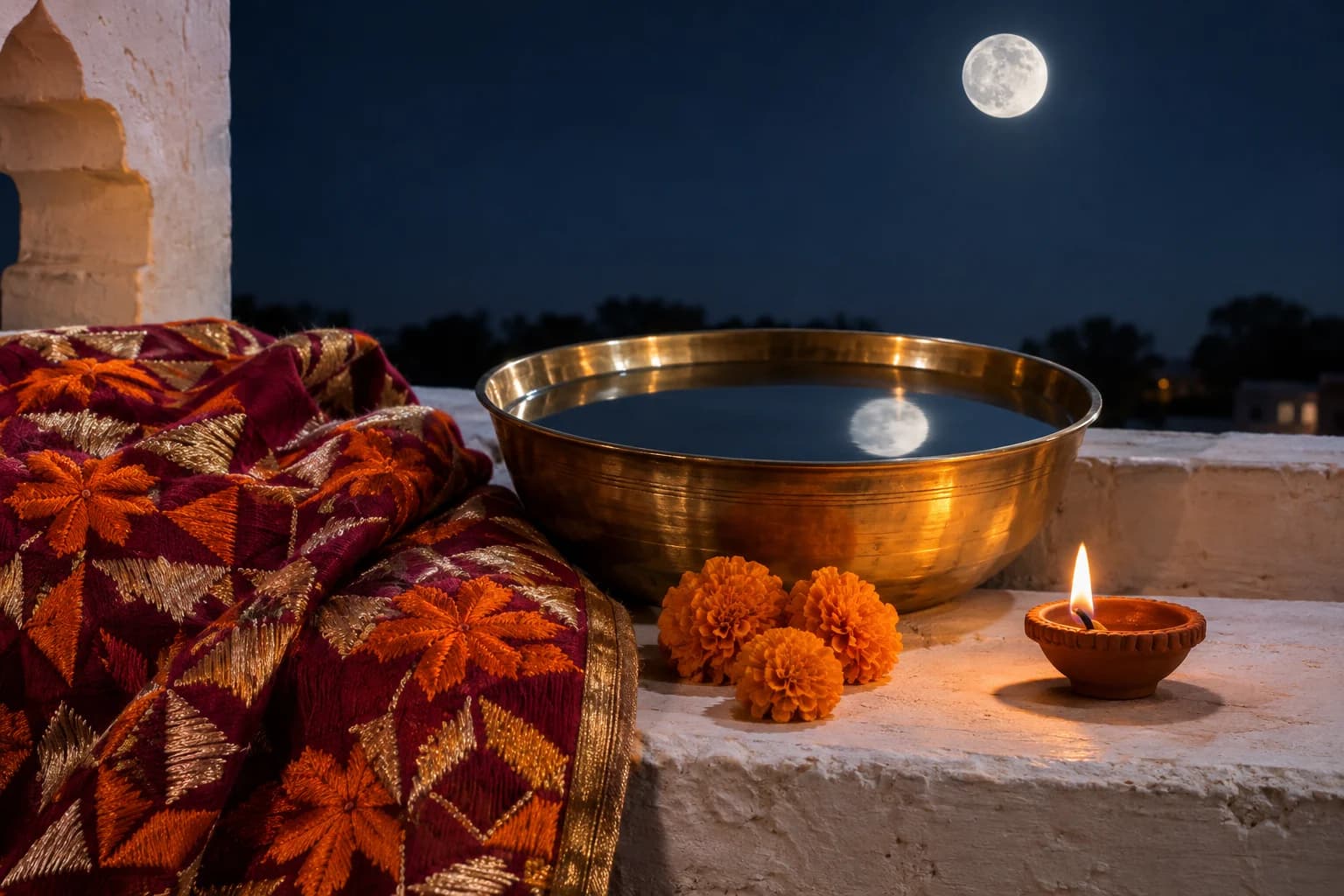
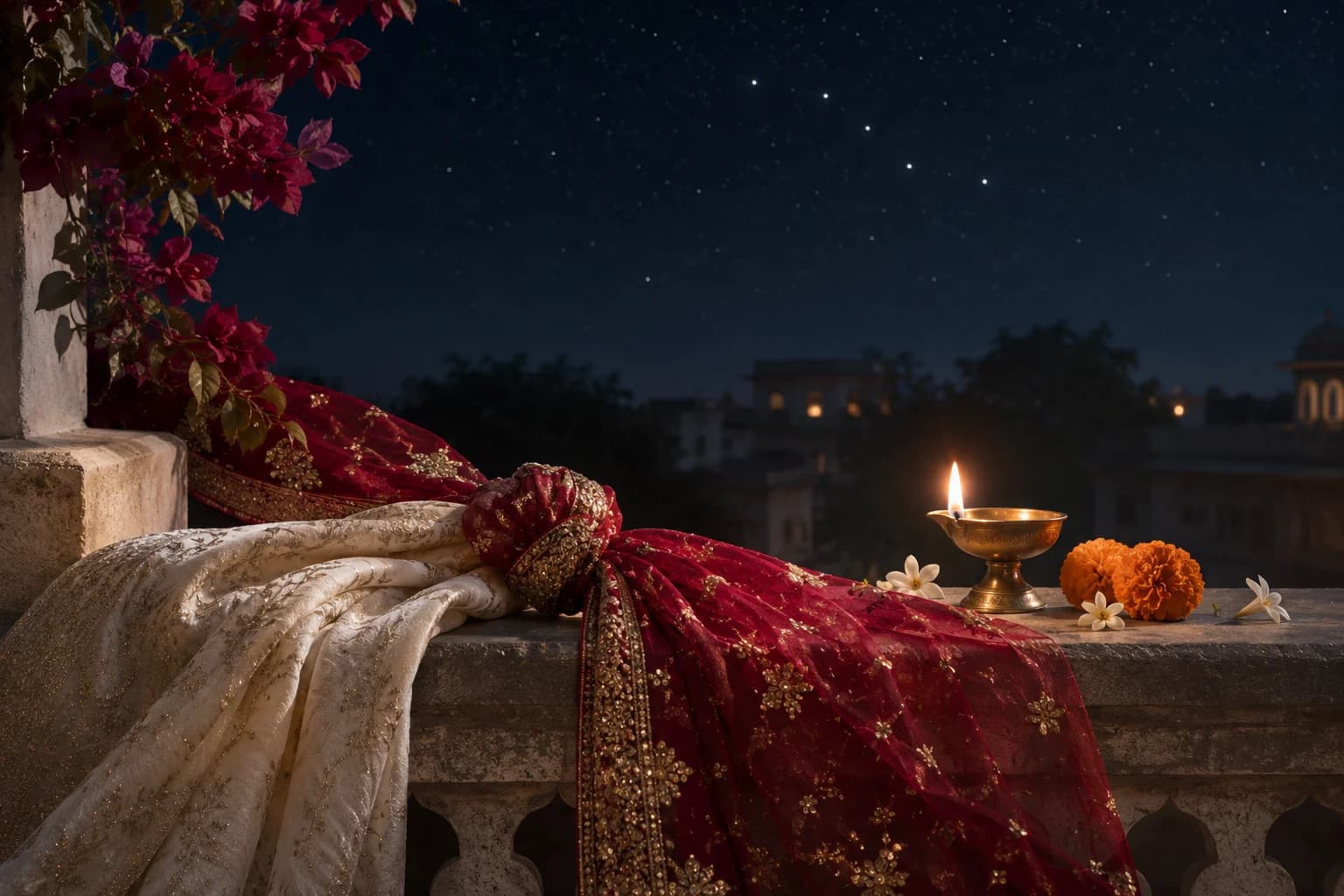
Ghudchadi meaning: why the groom rides a ghodi to his wedding
Why does an Indian groom ride a mare to his wedding? The ghudchadi, or ghudchadhi, before the baraat leaves, the kajal against nazar, the soaked chana for the mare, the ghodi songs and the joke behind it.
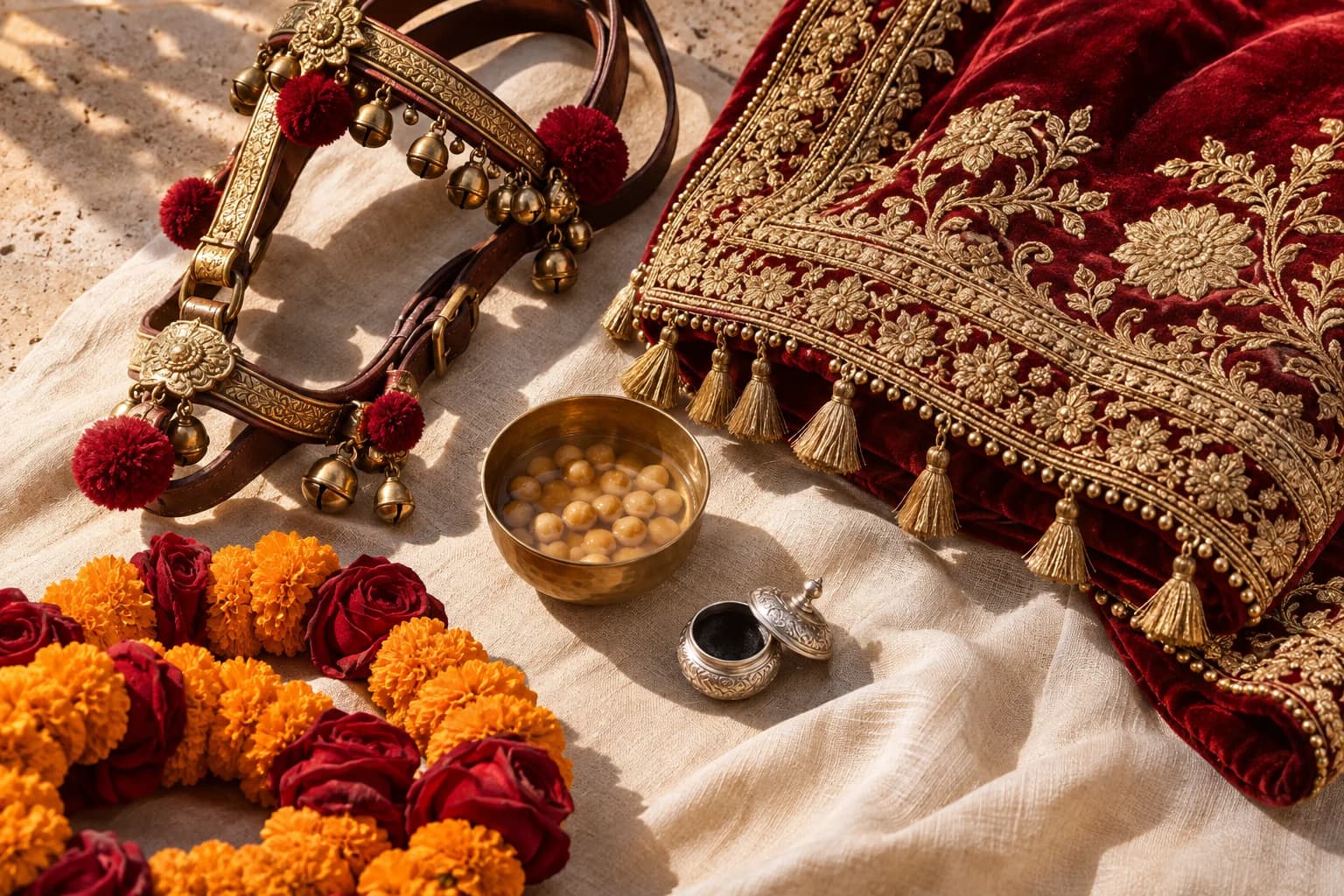
The dhol is already going, the baraatis are warming up, and in the middle of it all stands a mare dressed in red and gold. Before the groom climbs on, the women of his family take over: kajal for his eyes, chana for the mare, and a song for both of them. The ghudchadhi is the moment a North Indian baraat really begins.
What is ghudchadhi?
Ghudchadhi, or ghodi chadhna, means mounting the mare. It happens just before the baraat, the groom’s wedding procession, sets off for the bride’s venue. The mare is dressed in embroidered cloth and silver, the groom wears his safa and sehra, and once he is in the saddle, the procession can leave.
Kajal from his bhabhi
Before the baraat leaves, his bhabhi, his brother’s wife, lines his eyes with kajal. Families say it keeps the nazar, the evil eye, away from him on the one day everyone is looking at him. It is a common belief rather than a rule from scripture, and a small, affectionate moment before the noise begins.
Chana for the mare, songs for the groom
His sisters and cousins dress up the mare and feed it soaked chana, chickpeas, from their hands. Around them, the women of the family sing ghodiyan, the mare songs, which praise the groom and send him off to bring his bride home.
Why a ghodi?
There is no single recorded origin for the mare. The image everyone reaches for is royal: the groom rides out like a raja, on his way to win his bride. And every baraat has someone ready with the joke: if he can handle a ghodi, he can handle anything.
Rides out like a raja, to win his bride. And handle a ghodi, handle anything!
Then the baraat
Once the groom is up, the dhol takes over. The baraatis dance their way to the venue, often far more slowly than planned, and the bride’s family waits at the entrance to welcome them. The varmala usually follows soon after.
Ghodi pe dulha, dhol pe baraati. Shaadi ki sabse filmy entry! The groom on the mare, the guests on the dhol.
Varmala meaning in English: why friends lift the groom
The baraat on your invitation
Give the baraat its own line, with the time it leaves and where it starts, since that is rarely the wedding venue. Guests who want to dance in the procession need the starting point; guests who would rather skip it can come straight to the venue, so give them a time to arrive for the welcome as well. Ask guests to reply for the baraat and the wedding separately, and you will know how many will be on the road.
Rajasthani wedding invitations: royal wording and templates
Hindu wedding invitations: wording, functions and templates
Quick answers
- What is ghudchadhi? The groom mounting a decorated mare before the baraat sets off for the bride’s venue.
- Why does the bhabhi put kajal on the groom? Families say it keeps the evil eye away from him on his wedding day.
- Why is the mare fed chana? It is part of the send-off: the groom’s sisters feed the mare soaked chickpeas while the women sing ghodi songs.
- Why a mare? No single origin is recorded. Families say he rides out like a raja to win his bride.
Escrito por Inviteeq Editorial, con cariño para cada celebración. Cómo escribimos y revisamos estas historias