Neminath story: why the groom turned back from his own baraat
In the Jain tradition, Prince Neminath turned back from his own wedding to free animals penned for the feast. Who he was, Rajul’s diksha, Girnar, ahimsa, and why a Jain wedding feast is vegetarian.
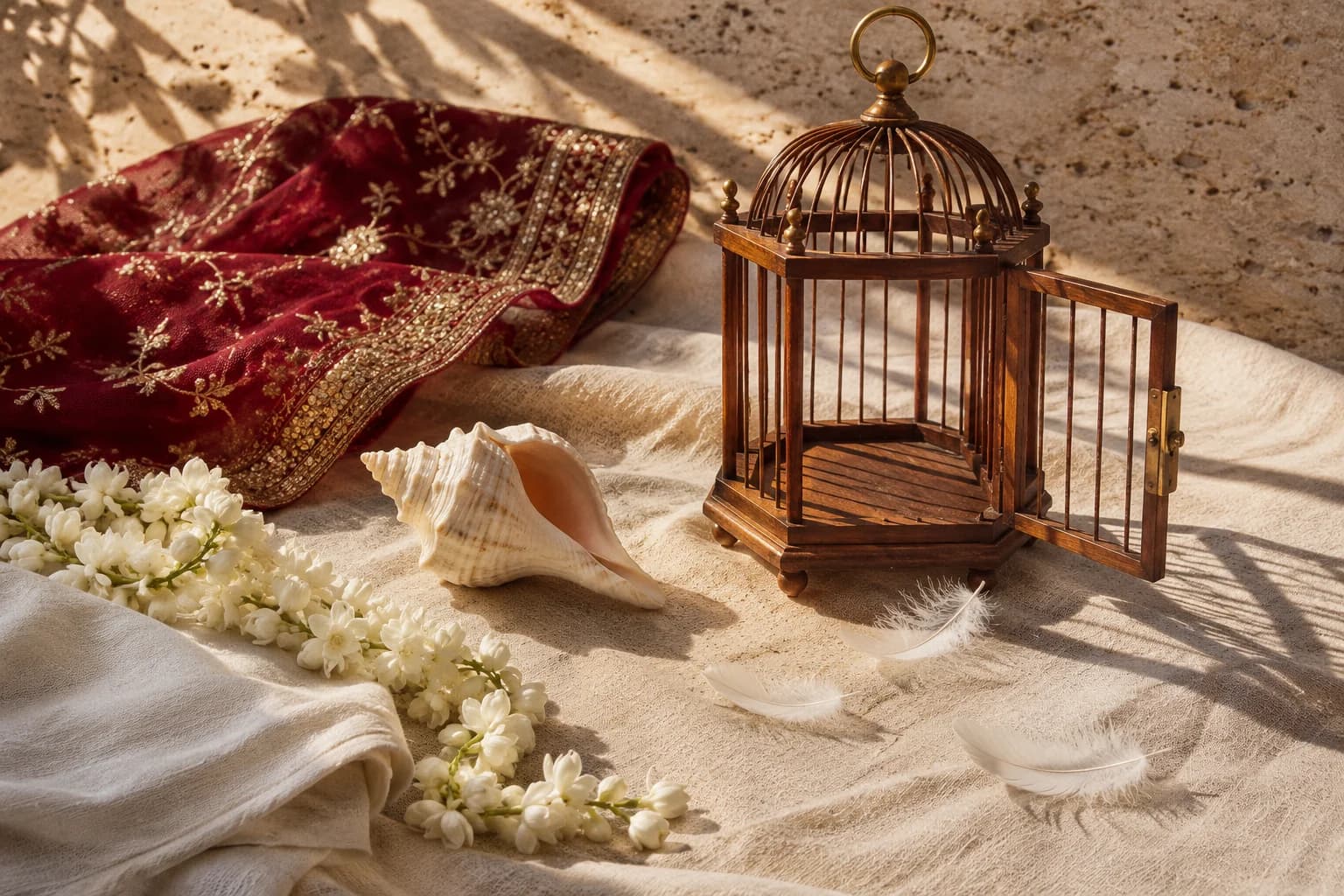
In the Jain tradition, Prince Neminath, the 22nd Tirthankara, was on his way to marry Princess Rajul when he heard the cries of animals and birds penned up for the wedding feast. Moved by compassion, he had them freed, turned his chariot back, renounced the world and practised austerities on Mount Girnar. Rajul took diksha too.
The sehra is tied, the baraat is dressed in its best, the drums are going, and at a palace window the bride is waiting. Then the groom’s chariot turns round and leaves. It sounds like the plot of a film. In the Jain tradition it is one of the best-loved stories there is, and part of the reason a Jain wedding feast looks the way it does.
Who was Neminath?
Neminath, also called Arishtanemi, is the 22nd of the 24 Tirthankaras of Jainism. A Tirthankara, literally a ford-maker, is a teacher who has crossed the stream of rebirth and shows others the way across. In the Jain tellings, Neminath was a prince of the Yadavas, the son of King Samudravijaya, and so a cousin of Krishna. His emblem is the conch, the shankh.
His marriage was arranged with Princess Rajul, also called Rajimati, the daughter of King Ugrasena. Her home is popularly placed at Junagadh in Gujarat, near Mount Girnar.
The baraat that turned back
The wedding procession set out for Rajul’s door, with Neminath riding in his chariot. On the way he heard cries, and saw animals and birds shut in pens and cages beside the road. His charioteer told him they were meant for the wedding feast.
Filled with karuna, compassion, Neminath had every pen opened and every animal and bird set free. Then he turned his chariot round, away from the wedding.
Karuna se bhare Neminath ne saare baade khulwa diye, aur rath mod liya. Filled with compassion, Neminath had every pen opened, and turned his chariot back.
Ghudchadi meaning: why the groom rides a ghodi to his wedding
Girnar, and Rajul’s diksha
Neminath renounced the world and went to Mount Girnar to practise austerities. Jains hold that it was on Girnar that he attained kevala jnana, perfect knowledge, and later moksha, liberation from rebirth, and the mountain is a place of Jain pilgrimage.
Rajul, too, took diksha, initiation into the life of a renunciant, and followed his path as a nun.
The story is told in the Svetambara scriptures, in the twenty-second chapter of the Uttaradhyayana Sutra and in the Kalpa Sutra’s lives of the Jinas, and among Digambaras in Jinasena’s Harivamsha Purana. The tellings differ in some details, such as who arranged the feast and Krishna’s part in it, but they share this core.
Ahimsa, karuna and the wedding feast
Ahimsa, non-violence, and karuna, compassion, are at the heart of Jainism, and Neminath turning back from his own wedding is often told as a picture of both. That is also part of why a Jain wedding feast is purely vegetarian. Many Jain families go further and leave out onion, garlic and root vegetables, though practice varies from home to home.
None of this makes a Jain wedding any less joyful. A wedding is a celebration, and compassion is part of it too. The feast is still a feast, as any guest will tell you.
Mama ji caterer se: ‘Paneer kitne prakaar ka?’ ‘Saat.’ ‘Bas?’ Mama ji to the caterer: ‘How many kinds of paneer?’ ‘Seven.’ ‘That’s it?’
A Jain wedding on your invitation
If your feast is Jain food, without onion and garlic, say so in the dinner details, so guests who keep to it can relax and nobody is surprised. Ask about food in your RSVP as well, so the caterer knows how many Jain plates to prepare if the rest of the menu differs. Many Jain families greet guests with Jai Jinendra, and it sits warmly at the top of an invitation. Give each function its own date, time and venue, so guests can reply for each one.
Wedding RSVP checklist: what to ask guests, and when
Wedding invitation wording: how to choose the tone and words
Quick answers
- Why did Neminath turn back from his wedding? In the Jain tradition, he heard the cries of animals and birds penned up for the wedding feast, had them freed and turned his chariot back.
- Who was Rajul? Princess Rajul, or Rajimati, the daughter of King Ugrasena, whom Neminath was to marry. She too took diksha and followed his path.
- Where did Neminath practise austerities? On Mount Girnar, near Junagadh in Gujarat, where Jains hold he attained kevala jnana and moksha.
- Why is a Jain wedding feast vegetarian? Because of ahimsa and karuna, and Neminath’s story is part of why. Many families also leave out onion and garlic.
Inviteeq Editorial द्वारा लिखा गया। हम ये लेख कैसे लिखते और जाँचते हैं