Eidi meaning: why elders give money and gifts on Eid
Eidi is the money or gifts elders give children on Eid: a loving custom, not a religious duty. Chaand raat, Eid ul-Fitr, fitra before the Eid prayer, Eid morning, and what it means for your guest list.
Eidi is the money or gifts that elders give children and younger relatives on Eid. It is a much-loved custom, not a religious duty, and a way of sharing the joy of Eid ul-Fitr after a month of fasting. The required charity of Eid is fitra, given before the Eid prayer so the poor can celebrate too.
On Eid morning, before the sevaiyan is served and before the first hug, the children are already doing the rounds. They know which uncle has crisp new notes in his pocket, and whose Eidi is always the biggest. It is the first thing they look for, and the thing they remember for years.
Eid ul-Fitr: the Eid of breaking the fast
Eid ul-Fitr means the festival of breaking the fast. It falls on the first day of Shawwal, straight after Ramadan, the month of rozas, the daytime fasts, which lasts 29 or 30 days. Eid begins when the new crescent moon is sighted, so its exact day is confirmed only the evening before, and it can differ by a day from one country to another. In India, Eid ul-Fitr 2027 is expected on Wednesday 10 March, subject to the moon sighting.
Chaand raat: bangles, mehendi, new clothes
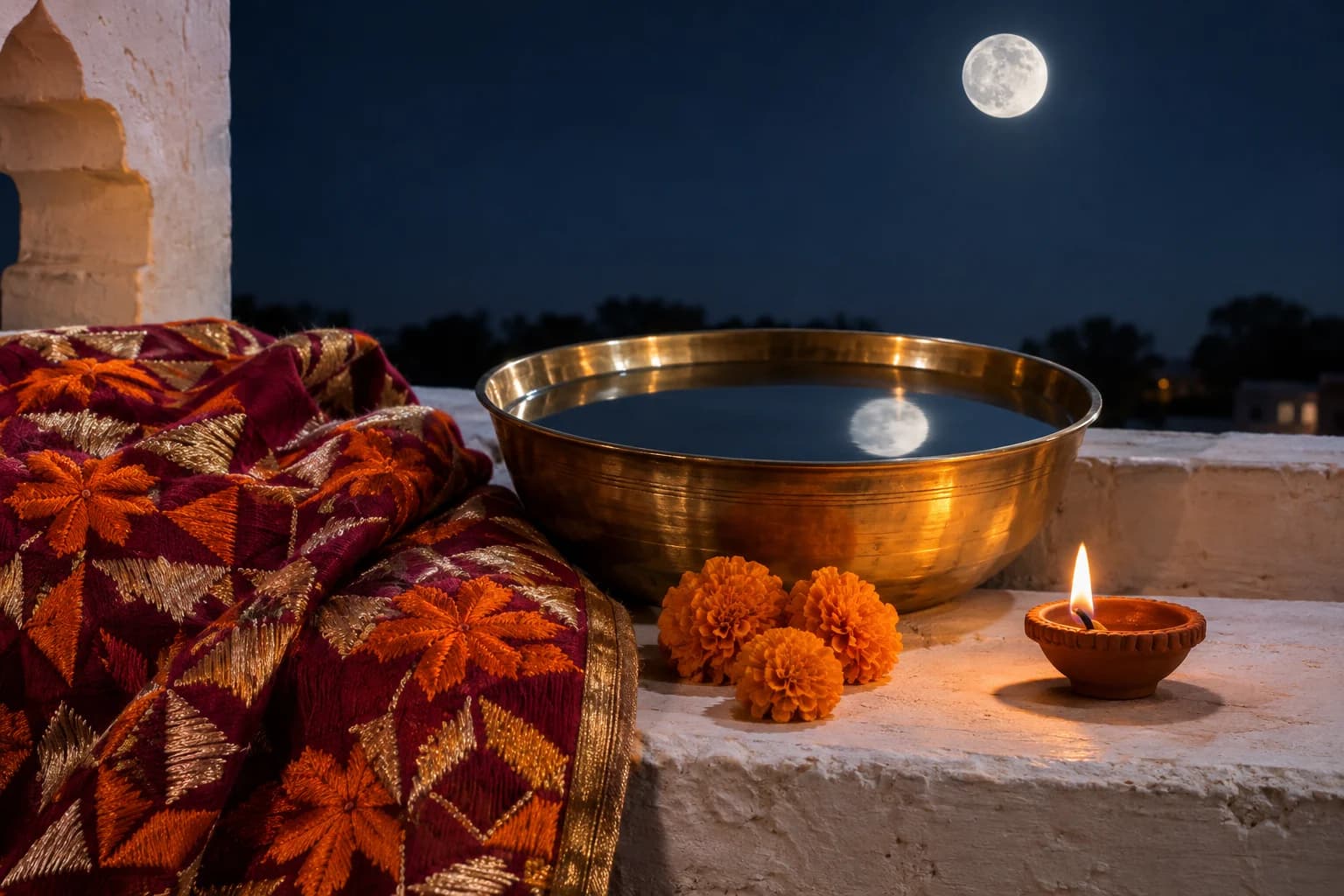
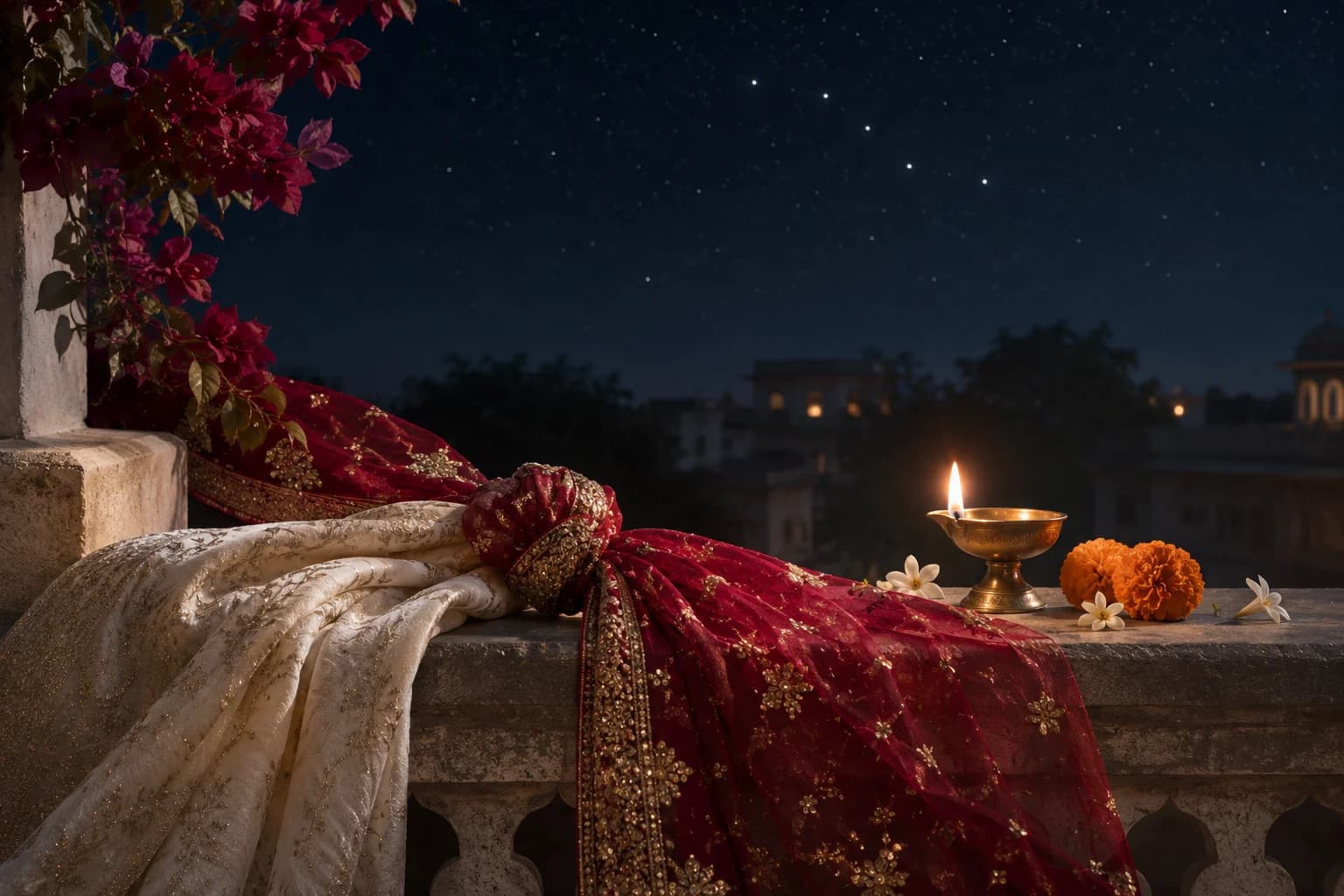
The night the moon is sighted is chaand raat, the night of the moon. In South Asia it is a night out: the bazaars stay busy late, there are bangles to buy and mehendi to put on, and new clothes are laid out ready for the morning.
Fitra: so that Eid reaches every home
Before the celebration, there is a duty. Fitra, or zakat al-fitr, is a required charity on every Muslim who can afford it, given on behalf of each member of the household, before the Eid prayer. Traditionally it is a measure of staple food such as dates, barley or wheat; in the Hanafi school, its value can be given in money. For the amount, families usually ask their local masjid or scholar.
Sahih al-Bukhari (1503) records that it was to be given before people went out to the prayer, and a hadith in Sunan Abi Dawud (1609) describes it as a purification for the one who fasted, and food for the poor. The point is simple: Eid should reach the homes of the poor too.
And Eidi? A custom of love
Eidi is something else. It is not a religious obligation but a custom, and a much-loved one: elders give money or gifts to children and younger relatives, to share the joy of the day. In the Arab world it is called eidiyya, and its spread is often traced to medieval courts that handed out money and clothes at Eid.
In India, fetching crisp new notes from the bank before Eid, kadak note, is almost part of the festival. How much is given, and who gives to whom, is up to each family. The meaning is the same everywhere: the elders’ love, in a form a child can hold.
Mazhabi farz nahi, pyaari rasm hai: badon ka pyaar, note ya tohfe mein, khushi baantne ko. Not a religious duty, a lovely custom: the elders’ love, in notes or gifts, to share the joy.
Sevaiyan, sheer khurma and Eid Mubarak
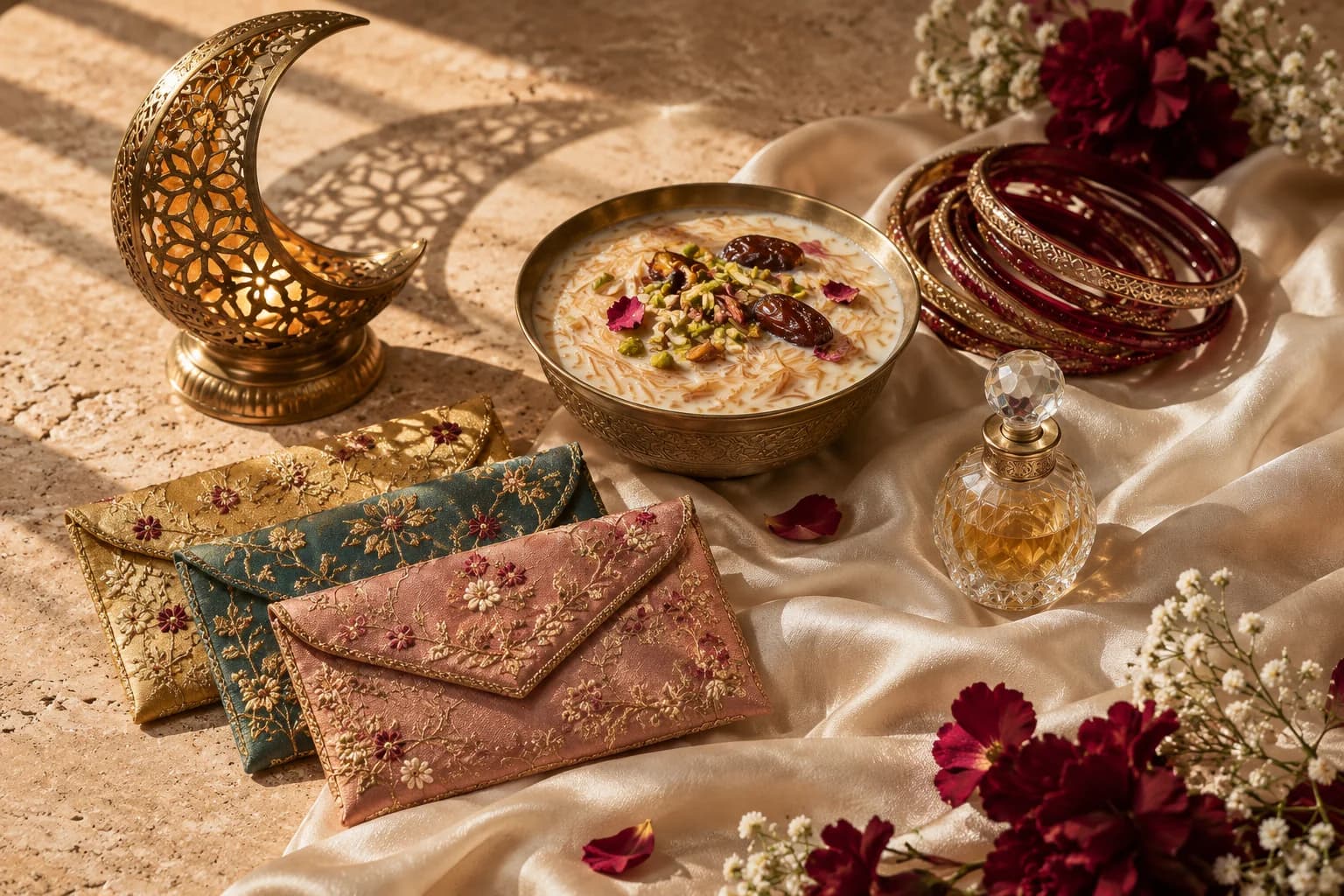
After the Eid prayer, the house fills up. There is sevaiyan, fine vermicelli, and sheer khurma, vermicelli cooked in milk with dates and dry fruit. Everyone is in new clothes, and every guest through the door gets a hug, gale milna, and an Eid Mubarak. Customs vary from family to family and region to region, but the hugs rarely do.
Tees saal ke Bhaijaan bhi line mein: ‘Shaadi ho gayi toh kya, Eidi toh banti hai!’ Thirty-year-old Bhaijaan is in the queue too: ‘So what if I’m married, I still get my Eidi!’
No one left behind
Put fitra and Eidi side by side and you see the shape of the day. Fitra makes sure the poorest homes can celebrate; Eidi makes sure the youngest feel celebrated. Either way, the idea is the same: on Eid, no one is left behind.
Eid and your wedding invitation
If your wedding falls near Eid, remember that the date depends on the moon: avoid fixing a function on the expected day, or the day either side, unless you are ready to move it. Eid visits are a good time to invite the elders in person. And take the spirit of the day to your guest list. Before you send, look for the people who are easiest to forget, such as neighbours, the people who help run your home and older relatives who do not use a smartphone, and invite them by call or with a printed card. Ask everyone to reply for each function, so the counts are right.
Nikah invitation wording and templates
Simple nikah: why the most blessed nikah is the simplest one
Walima: why the groom’s family hosts the wedding feast
Quick answers
- What is Eidi? Money or gifts that elders give children and younger relatives on Eid.
- Is Eidi compulsory in Islam? No. It is a custom, not a religious duty. The required charity of Eid ul-Fitr is fitra.
- When is fitra given? Before the Eid prayer, on behalf of each member of the household, by every Muslim who can afford it.
- Why is the date of Eid ul-Fitr not fixed in advance? It begins when the new crescent moon is sighted, so the day is confirmed only the evening before.
Escrito por Inviteeq Editorial, con cariño para cada celebración. Cómo escribimos y revisamos estas historias